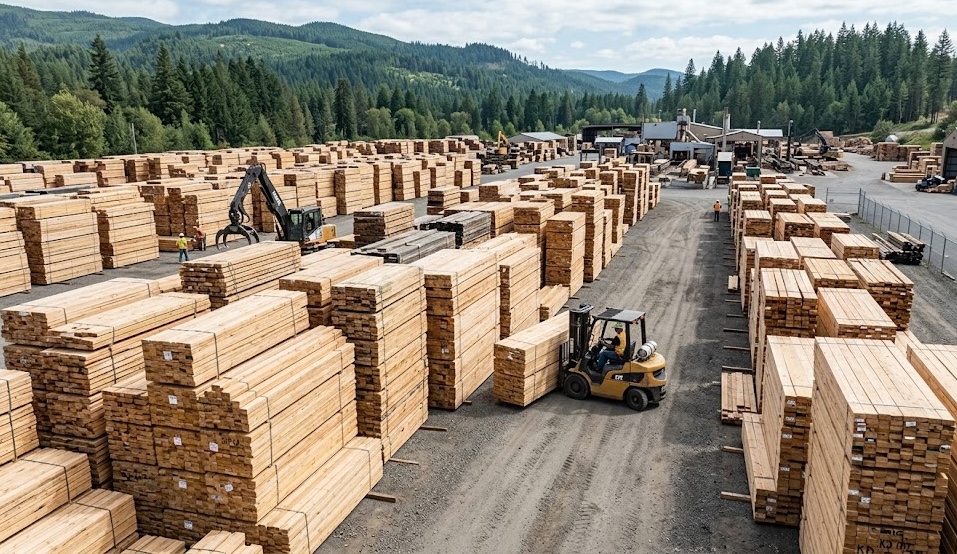
An in-depth reference to the hardwood and softwood species available at Norfolk Lumber. Learn about each species' characteristics, workability, and best applications.
Tell us about your project and we'll get back to you within one business day.
Janka Hardness measures the resistance of wood to denting and wear. Higher numbers = harder wood. For flooring, 1,000+ is recommended.
1,360 lbf
47 lb/ft³
Pale brown to medium brown with olive undertones
Workability: Good — machines well, responds to steam bending, takes finishes excellently
Common Uses: Flooring, furniture, cabinetry, boat building, wine barrels, exterior applications
Naturally rot-resistant due to tyloses that block water penetration. The gold standard for exterior hardwood applications.
1,290 lbf
44 lb/ft³
Light to medium reddish-brown with prominent grain
Workability: Very good — easy to machine, nail, and glue. Stains well.
Common Uses: Flooring, furniture, cabinets, trim, paneling
The most common hardwood in North America. Not rot-resistant — best for interior use.
540 lbf
30 lb/ft³
Light to medium brown, darkens with age
Workability: Excellent — soft, easy to work, nails without splitting
Common Uses: Paneling, furniture, decorative accents, framing (historical)
Functionally extinct due to chestnut blight. Reclaimed is the only commercial source. Highly prized by woodworkers.
1,450 lbf
44 lb/ft³
Cream to light reddish-brown
Workability: Moderate — very hard, can burn during machining if not careful
Common Uses: Flooring, bowling alleys, butcher blocks, gym floors, high-wear surfaces
One of the hardest domestic hardwoods. Excellent wear resistance.
1,010 lbf
38 lb/ft³
Rich chocolate brown with purple undertones
Workability: Very good — machines beautifully, finishes to a lustrous sheen
Common Uses: Fine furniture, gunstocks, mantels, accent pieces, turning
Premium domestic hardwood. Highly valued for its color and figure.
540 lbf
29 lb/ft³
Cream to yellowish-green, can have purple streaks
Workability: Excellent — very easy to machine, sand, and paint
Common Uses: Painted trim, drawers, interior woodwork, secondary wood in furniture
Affordable utility hardwood. Often used where appearance wood will be painted.
1,320 lbf
42 lb/ft³
Light tan to medium brown with a straight, prominent grain
Workability: Very good — machines cleanly, bends well under steam, holds fasteners securely
Common Uses: Tool handles, baseball bats, flooring, furniture, stair components, boat oars
Prized for its exceptional shock resistance and elasticity. The emerald ash borer has devastated standing ash populations across the eastern U.S., making reclaimed ash increasingly valuable. Grain pattern resembles oak but with a slightly lighter tone and smoother texture.
950 lbf
35 lb/ft³
Light pinkish-brown when fresh, darkening to rich reddish-brown with UV exposure over weeks
Workability: Excellent — one of the best domestic species for hand and machine work, finishes to a superb luster
Common Uses: Fine furniture, cabinetry, architectural millwork, musical instruments, decorative veneers
Often called the premier American furniture wood. Cherry darkens dramatically with light exposure — new installations will change color noticeably within the first six months. Reclaimed cherry has already completed this color transition and offers a deep, stable patina.
1,820 lbf
50 lb/ft³
Wide variation from pale cream (sapwood) to medium brown (heartwood), often in the same board
Workability: Difficult — extremely hard, tough on tools, requires sharp carbide tooling and slow feed rates
Common Uses: Flooring, tool handles, ladder rungs, sporting goods, rustic furniture, smoking wood for food
The hardest and strongest common North American hardwood. Hickory flooring is virtually indestructible and its dramatic color variation between heartwood and sapwood creates bold, high-contrast floors. Reclaimed hickory is uncommon because it was rarely used in large structural applications, making salvaged stock a specialty item.
830 lbf
35 lb/ft³
Light to medium brown with reddish tones, interlocking grain pattern
Workability: Moderate — interlocked grain can tear during planing, requires careful technique and sharp blades
Common Uses: Furniture, bent laminations, boxes, crates, historically used for wheel hubs and water pipes
Dutch elm disease decimated American elm populations starting in the 1930s. Reclaimed elm is sourced from pre-disease structures and old-growth timber. The interlocking grain gives elm extraordinary resistance to splitting, which is why it was historically used for wooden water pipes and wheel hubs. Its grain pattern is distinctive and unmistakable.
1,300 lbf
45 lb/ft³
Pale cream to light pink-brown, darkens slightly with age, distinctive flecked ray pattern on quartersawn faces
Workability: Good — machines well when sharp tools are used, excellent for turning on a lathe, steam bends readily
Common Uses: Workbench tops, food-contact surfaces, wooden planes, chair parts, flooring, interior trim
Beech is the traditional wood for European workbenches and wooden hand planes. Its uniform texture and lack of strong grain pattern make it ideal for utilitarian surfaces. It is not naturally durable outdoors and should be reserved for interior applications. Reclaimed beech often comes from old factory floors and industrial workbenches where it has developed a beautiful honey patina.
1,260 lbf
43 lb/ft³
Light yellowish-brown to reddish-brown, often with a subtle golden sheen
Workability: Good — machines well with sharp tools, turns excellently, takes stain and finish uniformly
Common Uses: Cabinetry, furniture, interior doors, plywood core, dowels, toothpicks, tongue depressors
Yellow birch is often underappreciated compared to showier species but offers excellent value. Its fine, even texture takes stain beautifully and it can be finished to closely mimic cherry or walnut at a fraction of the cost. Reclaimed birch is sourced from old flooring, millwork, and industrial applications throughout the northeastern United States and Canada.
1,225 lbf
42 lb/ft³
Rich amber to deep reddish-brown
Workability: Moderate — hard for a softwood, dulls blades faster than modern pine
Common Uses: Flooring, beams, mantels, stair treads, furniture
Old-growth longleaf pine. Dramatically denser than modern plantation pine. Available only as reclaimed.
660 lbf
34 lb/ft³
Light reddish-brown to yellowish
Workability: Good — straight grain machines well, can splinter
Common Uses: Structural beams, heavy timber framing, industrial flooring, plywood
Exceptional strength-to-weight ratio. One of the strongest softwoods available.
350 lbf
23 lb/ft³
Reddish-brown to pinkish, weathers to silver gray
Workability: Easy — soft, light, cuts cleanly
Common Uses: Siding, decking, fencing, shingles, outdoor furniture
Naturally rot and insect-resistant. Low density makes it ideal for exterior cladding.
510 lbf
32 lb/ft³
Light yellowish-brown, variable
Workability: Good — works well with hand and power tools
Common Uses: Siding, exterior trim, boat building, tanks, garden structures
Excellent natural durability. Historical wood of the American South.
380 lbf
25 lb/ft³
Light cream to light brown
Workability: Excellent — very soft, carves and shapes easily
Common Uses: Trim, paneling, shelving, pattern making, light construction
Classic New England building material. Reclaimed wide-board white pine is highly sought after.
490 lbf (Sitka), 400 lbf (Eastern)
28 lb/ft³
Light cream to pale yellowish-white with a slight pinkish tint
Workability: Very good — straight grain planes and sands smoothly, minimal dulling of tools
Common Uses: Framing, sheathing, musical instrument soundboards (Sitka), aircraft construction (Sitka), crates, general construction
Sitka spruce has the highest strength-to-weight ratio of any commercial wood species, which is why it was used extensively in World War II aircraft construction. Reclaimed Sitka spruce is sourced from old aircraft hangars, military structures, and industrial buildings in the Pacific Northwest. Eastern spruce is one of the SPF (Spruce-Pine-Fir) group species that dominates modern construction framing.
500 lbf
28 lb/ft³
Light reddish-brown with a coarse, uneven texture
Workability: Moderate — can splinter and tear due to interlocked grain, brittle compared to pine and fir
Common Uses: Barn framing, railroad construction, roof decking, sub-flooring, crates, pulpwood
Hemlock was the workhorse timber of 19th-century barn and railroad construction throughout the northeastern United States. Reclaimed hemlock beams are abundant from barn demolitions and often available in massive dimensions — 8x8, 10x10, and 12x12 timbers are common. The wood has a distinctive reddish tone that deepens beautifully with finishing. Not naturally rot-resistant, so best used for interior applications.
870 lbf
36 lb/ft³
Yellowish to light orange-brown with prominent grain lines
Workability: Good — harder than most softwoods, takes fasteners and pressure treatment well
Common Uses: Structural framing, decking, treated lumber, plywood, industrial flooring, pallets
Modern southern yellow pine (SYP) is a group name covering loblolly, shortleaf, longleaf, and slash pine grown on commercial plantations. It is significantly less dense than the old-growth longleaf pine sold as "heart pine" because plantation trees grow much faster with wider growth rings. SYP is the primary structural softwood species in the southeastern United States and the dominant species used for pressure-treated lumber. Its high resin content makes it receptive to preservative treatment.
420 lbf
28 lb/ft³
Deep reddish-brown heartwood, creamy white sapwood
Workability: Very good — soft, lightweight, cuts and machines easily with minimal splintering
Common Uses: Exterior siding, decking, fencing, garden structures, hot tubs, interior paneling
Coast redwood is one of the most naturally durable softwoods on earth, with heartwood that resists rot, insects, and weathering for decades without chemical treatment. New-growth redwood is commercially available but expensive. Reclaimed redwood — salvaged from old water tanks, wine vats, barn siding, and demolished structures in California — offers old-growth quality with tighter grain and deeper color than modern plantation stock. Reclaimed redwood is an exceptional choice for exterior applications where longevity and beauty are both priorities.
Some of the most beautiful and historically significant wood species in North America are no longer available as new lumber. Disease, over-harvesting, and habitat loss have made these species commercially extinct. Reclaimed lumber is the only way to obtain these woods today, and their scarcity makes them highly prized by woodworkers, architects, and collectors.
The chestnut blight (Cryphonectria parasitica) destroyed an estimated 4 billion American chestnut trees between 1904 and 1940, eliminating what had been one of the most important timber species in eastern North America. Chestnut comprised up to 25% of the canopy in Appalachian forests. The wood is lightweight, easy to work, naturally rot-resistant, and beautifully grained. Reclaimed chestnut comes primarily from barn siding, timber framing, and fence rails throughout the Appalachian region. "Wormy chestnut" — wood with insect tunnels from post-blight boring — is especially popular for rustic paneling and furniture. Norfolk Lumber maintains a dedicated inventory of reclaimed American chestnut in various dimensions.
Longleaf pine forests once covered 90 million acres across the American Southeast, from Virginia to Texas. By the early 1900s, industrial logging had reduced this to less than 3% of the original range. Old-growth longleaf pine is dramatically different from modern plantation pine — growth rings are tightly packed (12-30 per inch versus 4-6 in modern pine), producing wood with exceptional hardness, density, and resin content. Heart pine, the resin-saturated heartwood of old longleaf, has a Janka hardness rating comparable to red oak and a rich amber color that deepens with age. It is available only as reclaimed material from buildings, bridges, and industrial structures built before 1940.
While white oak is still commercially harvested, the old-growth specimens that once produced boards 20 to 30 inches wide with tight, consistent grain are gone. Modern white oak is typically available in widths up to 10-12 inches with wider growth rings and less figure. Reclaimed old-growth white oak from 19th-century warehouses, factory floors, and bridge timbers offers widths, grain density, and character that cannot be replicated with new material. The tyloses that make white oak rot-resistant are more fully developed in old-growth wood, making reclaimed white oak superior to new stock for exterior applications and cooperage.
Dutch elm disease arrived in North America in the 1930s and has since killed hundreds of millions of elm trees. The fungal disease, spread by bark beetles, clogs the tree's vascular system and is nearly always fatal. American elm was the dominant street tree in cities across the eastern United States — its graceful, vase-shaped canopy made it an urban icon. The wood features a beautiful interlocking grain that makes it nearly impossible to split, which historically made it the preferred species for wheel hubs, ship keels, and water pipes. Reclaimed elm is sourced from pre-disease structures and is treasured for furniture and decorative applications.
True Cuban mahogany was the original "mahogany" used in the finest 18th and 19th-century furniture. It is now so scarce that international trade is heavily restricted under CITES (Convention on International Trade in Endangered Species). Reclaimed Cuban mahogany occasionally surfaces in salvage from historic buildings, antique furniture, and old boats. It is distinguishable from the more common Honduran mahogany (Swietenia macrophylla) by its higher density, finer grain, and deeper reddish color. Any reclaimed Cuban mahogany we acquire is documented and sold as a premium specialty item.
Atlantic white cedar once formed dense coastal swamp forests from Maine to Mississippi. Extensive logging from colonial times through the early 20th century depleted most stands. The wood is exceptionally rot-resistant, lightweight, and aromatic — it was the preferred material for shingles, boat building, and organ pipes. Reclaimed Atlantic white cedar comes from old shingle mills, boatyard salvage, and historic coastal buildings. It is distinguished from western red cedar by its lighter color, finer texture, and more pungent cedar scent. Norfolk Lumber occasionally stocks reclaimed Atlantic white cedar and can source it through our salvage network when available.
Match the right species to your application. This matrix rates each species across key performance criteria to help you make informed decisions. Ratings are relative within each category.
| Species | Flooring | Furniture | Structural | Exterior | Hardness | Workability |
|---|---|---|---|---|---|---|
| White Oak | 5 | 5 | 4 | 5 | 4 | 4 |
| Red Oak | 5 | 4 | 3 | 1 | 4 | 5 |
| Hard Maple | 5 | 4 | 3 | 1 | 5 | 3 |
| Black Walnut | 4 | 5 | 2 | 2 | 3 | 5 |
| Cherry | 3 | 5 | 2 | 1 | 3 | 5 |
| Hickory | 5 | 3 | 4 | 2 | 5 | 2 |
| Ash | 4 | 4 | 4 | 2 | 4 | 4 |
| Heart Pine | 5 | 4 | 5 | 3 | 4 | 3 |
| Douglas Fir | 3 | 3 | 5 | 3 | 2 | 4 |
| Cypress | 2 | 3 | 3 | 5 | 2 | 4 |
| W. Red Cedar | 1 | 2 | 1 | 5 | 1 | 5 |
| Redwood | 2 | 3 | 2 | 5 | 1 | 5 |
Ratings: 5 = Excellent, 4 = Very Good, 3 = Suitable, 2 = Marginal, 1 = Not Recommended. Exterior ratings assume no chemical treatment.
Identifying wood species is part science and part art. Professional wood identification relies on microscopic examination of cell structure, but you can narrow down most common species using four sensory characteristics: grain pattern, color, weight, and smell. Here is how to use each one.
Grain is the single most useful visual identification feature. Ring-porous hardwoods (oak, ash, elm, hickory) show distinct earlywood pores visible to the naked eye as lines or grooves in the face grain. Diffuse-porous hardwoods (maple, birch, cherry, poplar) have evenly distributed pores that are small and uniform, creating a smooth, fine texture. Softwoods show alternating bands of earlywood and latewood — tight bands indicate old-growth, wide bands indicate fast-grown plantation wood.
Look at the end grain with a 10x hand lens. Oak has large pores in distinct rows. Ash has similar pore arrangement but the pores are smaller. Elm has a distinctive wavy, non-linear pore pattern. Maple and birch show tiny, scattered pores with no visible pattern. Cherry has medium-sized, evenly distributed pores. End grain examination is the fastest way to separate look-alike species.
Color is helpful but unreliable as a sole identifier because it changes with age, UV exposure, and finishing. Fresh-cut surfaces are most useful — make a small cut or sand a spot to reveal the wood beneath any surface patina. Walnut is unmistakable: rich chocolate brown to purplish-brown. Cherry starts pinkish and darkens to deep reddish-brown. White oak is tan with olive undertones. Red oak is pinkish-tan to light brown. Maple is cream to off-white. Poplar is cream with distinctive greenish or purplish streaks.
For softwoods, heart pine is amber to deep reddish-brown (significantly darker than modern pine). Douglas fir is yellowish to orange-brown. Cedar is reddish-brown with a wide color range. Hemlock is light reddish-brown. Spruce is pale cream, nearly white. When comparing colors, always use freshly sanded surfaces under consistent lighting — different light sources can dramatically shift color perception.
Picking up a board and judging its weight is surprisingly diagnostic, especially for separating similar-looking species. At the same moisture content, hickory and hard maple are noticeably heavier than other common hardwoods. White oak feels heavier than red oak. Cherry and walnut are medium weight. Poplar and chestnut are noticeably light for hardwoods — they feel closer to softwoods in hand.
Among softwoods, heart pine is strikingly heavy — if you pick up a piece of “pine” and it feels as heavy as a hardwood, you are probably holding old-growth heart pine. Douglas fir is moderately heavy. Cedar and redwood are very lightweight — pick up a 2x6 of cedar and a 2x6 of SYP side by side and the weight difference is dramatic. Hemlock and spruce fall in the middle. Always compare boards at similar moisture content, as a wet board will feel much heavier than a dry one of the same species.
Fresh-cut or sanded wood often has a distinctive odor that can confirm an identification. Cedar is instantly recognizable — that sharp, aromatic, “cedar closet” scent is unmistakable and persists for decades. Cypress has a similar but more subtle aromatic quality. Douglas fir has a pleasant resinous scent with a slightly spicy character. White oak has a distinctive tannic, slightly vinegar-like smell (the same tannins that make it ideal for wine barrels). Red oak lacks this tannic scent and smells more neutral.
Cherry has a mild, pleasant, slightly sweet scent when freshly cut. Walnut has a subtle, earthy odor. Pine smells resinous and fresh — like Christmas trees. Poplar has a somewhat sour, unpleasant smell when freshly machined that dissipates after drying. Sassafras (occasionally found in reclaimed stock) has a distinctive root-beer scent that is unmistakable. For reclaimed wood, you may need to make a fresh cut or sand a small area to release the scent — the surface patina often masks the natural odor.
Wood dust from any species can cause respiratory irritation with prolonged exposure, but some species are known to trigger more severe allergic reactions, sensitization, or toxic responses. If you work with wood regularly — especially in a shop environment with power tools — understanding species-specific risks is important for your health.
Always wear a properly fitted dust mask (NIOSH N95 minimum, P100 recommended) when machining any wood species. Use dust collection at the source whenever possible. The following species deserve extra attention.
Western red cedar dust contains plicatic acid, which is a potent respiratory sensitizer. Repeated exposure can cause occupational asthma that persists even after exposure stops. Some workers develop sensitization after months of regular exposure, while others are affected immediately. Symptoms include chest tightness, wheezing, runny nose, and eye irritation. Cedar workers should always use P100 respiratory protection and maintain excellent dust collection. Once sensitization occurs, any subsequent exposure — even to very small amounts of dust — can trigger severe asthmatic episodes.
Walnut dust is a documented skin irritant and can cause allergic dermatitis (contact rashes) in sensitive individuals. Some woodworkers report nasal and eye irritation during prolonged machining. Walnut heartwood contains juglone, a natural chemical that is toxic to many plants and can cause skin darkening on prolonged contact. The dust is particularly fine and penetrating. Use gloves when handling fresh-cut walnut for extended periods and maintain dust extraction during machining. Finished walnut products pose no health risk to end users.
While not a species we typically carry as reclaimed, cocobolo and other Dalbergia rosewoods are among the most potent sensitizers in the woodworking world. Even brief exposure to the dust can cause severe dermatitis, respiratory distress, and nausea in sensitive individuals. We mention these species because they occasionally appear in reclaimed furniture and decorative items. If you encounter exotic tropical hardwoods in salvage material and are unsure of the species, handle them with gloves and a respirator until identified.
Eastern red cedar (actually a juniper, not a true cedar) produces aromatic dust that can cause nasal and throat irritation. The natural oils that give cedar its pleasant scent and insect-repelling properties are the same compounds that irritate mucous membranes. Most people tolerate brief exposure without problems, but extended machining in poorly ventilated spaces can cause headaches, sneezing, and sore throat. Use standard dust collection and respiratory protection when machining.
Beech and oak dusts are classified by the International Agency for Research on Cancer (IARC) as Group 1 carcinogens for nasal and sinus cancer. This classification applies specifically to occupational exposure in industrial settings — prolonged, heavy exposure over many years in dusty environments such as furniture factories. Occasional hobby woodworking does not present a significant cancer risk, but it reinforces the importance of proper dust collection and respiratory protection for anyone working with these species regularly. Finished beech products are completely safe for end users including food-contact applications.
Poplar dust is a mild skin and respiratory irritant that affects some woodworkers. The green heartwood coloring is caused by a chemical compound that can cause skin rashes in sensitive individuals during prolonged handling of freshly cut material. Poplar also produces a notably unpleasant sour odor during machining that, while not toxic, can cause nausea in sensitive individuals. Standard shop ventilation and a dust mask are usually sufficient. Finished and aged poplar products pose no health risk.
Different species suit different projects. Contact us and we'll help you select the right wood for your specific application, budget, and aesthetic goals.