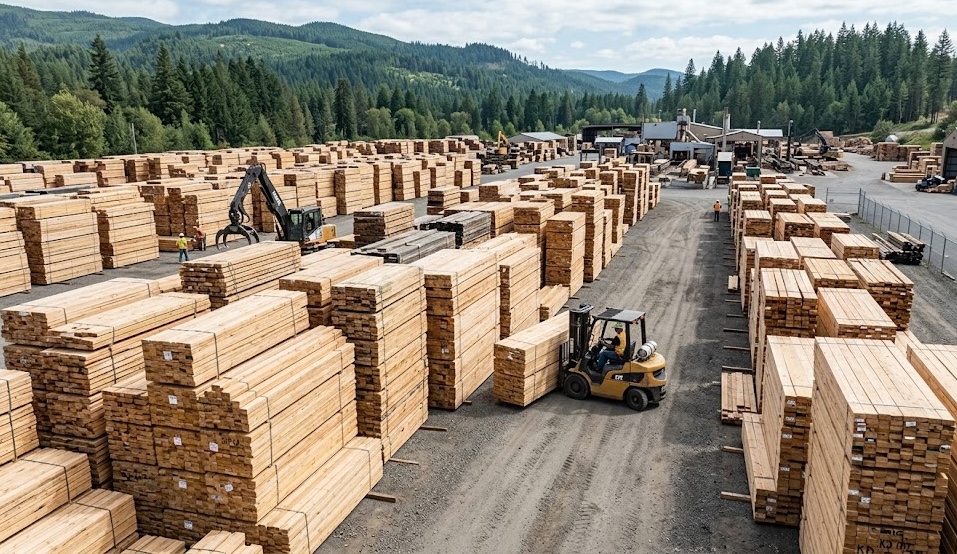
Reclaimed lumber is wood that has been salvaged from existing structures — barns, warehouses, factories, bridges, and other buildings — before or during demolition. Instead of going to a landfill, this wood is cleaned, de-nailed, graded, and prepared for reuse in new projects.
Is reclaimed lumber safe to use?
Yes. All of our reclaimed lumber is inspected for structural integrity, pest damage, and contamination. We do not sell lumber from chemically treated industrial applications. Our kiln-drying process kills any remaining insects or larvae. For structural applications, we grade to recognized standards.
Is reclaimed wood more expensive than new wood?
It depends on the species and grade. Common reclaimed softwood (like framing lumber) is often priced comparably to new stock. Specialty reclaimed species — like heart pine, American chestnut, or old-growth white oak — can command a premium because these species are no longer commercially available as new lumber. For the quality and character you get, many customers find reclaimed to be an excellent value.
Can reclaimed lumber be used for structural applications?
Yes, when properly graded. We visually grade reclaimed timber for structural use following WWPA and NHLA standards. Reclaimed old-growth lumber is often denser and stronger than modern plantation wood. For engineered applications, we recommend working with a structural engineer who can specify appropriate grades and species.
What species do you carry?
Our inventory includes heart pine, white oak, red oak, Douglas fir, American chestnut, poplar, maple, cypress, cedar, and various mixed hardwoods and softwoods. Availability changes as new salvage comes in — contact us for current stock.
Can you cut reclaimed lumber to custom dimensions?
Absolutely. Our milling operation can resaw, plane, profile (tongue-and-groove, shiplap), and cut reclaimed lumber to your exact specifications. See our Custom Milling page for details.
Can I visit the yard and pick out my own boards?
Yes! Walk-ins are welcome during business hours (Mon–Fri 7am–5pm, Sat 8am–2pm). Our yard is open for browsing and our team is on hand to help you find what you need. Bring your measurements and a picture of your project if you have one.
Do you buy reclaimed lumber?
Yes, we are always buying quality salvaged wood. If you have lumber from a demolition, renovation, or surplus situation, email us photos and approximate quantities. We'll provide a quote within 48 hours and handle pickup.
How should I acclimate reclaimed lumber before installation?
If the lumber hasn't been kiln-dried, allow it to acclimate in the installation environment for 1-2 weeks before use. Store it flat with stickers (spacers) between layers for air circulation. Kiln-dried stock requires minimal acclimation but should still be stored properly to prevent moisture uptake.
Do you deliver?
Yes. We deliver throughout the Mid-Atlantic region — Virginia, North Carolina, Maryland, DC, and beyond. Local delivery in the Hampton Roads area is available same-day or next-day. See our Transportation page for details and service areas.
What are your shipping options for out-of-state orders?
For orders outside our local delivery zone, we ship via flatbed freight carriers with experience handling lumber. Small orders under 500 board feet can often go via LTL (less-than-truckload) freight. For larger orders, we arrange dedicated flatbed trucks. We also work with customer-arranged carriers if you have a preferred shipper. Transit times typically range from 3 to 10 business days depending on distance, and we provide tracking information once the shipment leaves our yard.
How is reclaimed lumber packaged for shipping?
We band all lumber into tight bundles with protective corner boards to prevent edge damage during transit. Kiln-dried material is wrapped in moisture-barrier plastic to maintain its target moisture content. Large timbers and beams are cradled on pallets with foam padding between layers. We photograph every shipment before it leaves the yard so there is a documented record of the material's condition at origin. If you have specific packaging requirements for your job site, let us know when ordering.
Can I pick up my order at your yard?
Absolutely. Will-call pickup is available Monday through Friday from 7am to 5pm and Saturday from 8am to 2pm. We ask for at least 24 hours notice on orders over 500 board feet so our team can pull, stack, and band your material for efficient loading. We have a forklift on site and can load flatbeds, enclosed trailers, and pickup trucks. Make sure your vehicle is rated for the weight of your order — a thousand board feet of hardwood can weigh 3,000 to 4,000 pounds.
Do you offer expedited or rush delivery?
Yes, for local orders within the Hampton Roads area we can often arrange same-day or next-day delivery for in-stock material. For rush orders requiring custom milling, we charge a 15% expedite fee and prioritize your job in our production queue. Rush freight for out-of-state shipments is available through our carrier network at market rates. Contact us with your deadline and we will work to meet it — we understand that construction schedules are unforgiving and delays cost money.
Do you offer volume discounts?
Yes, we offer tiered pricing for larger orders. Contact us with your project details and quantities for a custom quote.
How is reclaimed lumber priced?
Reclaimed lumber is priced per board foot, which is a unit of volume equal to a piece 1 inch thick, 12 inches wide, and 12 inches long. Pricing varies significantly by species, grade, and level of processing. Rough-sawn material costs less than planed or profiled stock. Heart pine and American chestnut command the highest prices because supply is finite and demand is strong. We publish baseline pricing on our product pages and provide exact quotes for custom orders. Volume, repeat-customer, and trade discounts are available.
What payment methods do you accept?
We accept checks, wire transfers, ACH payments, and all major credit cards (Visa, Mastercard, American Express, Discover). For orders over $5,000, we typically require a 50% deposit at the time of order with the balance due before shipment or at pickup. Net-30 terms are available for established commercial accounts with approved credit. We also work with contractor financing arrangements where the general contractor or project owner pays directly.
Can I get a quote before ordering?
Yes, and we strongly encourage it. Email us your project specifications — species, grade, dimensions, quantity, and delivery location — and we will provide a detailed written quote within one business day. Quotes include material cost, any milling charges, and delivery fees so you see the full landed cost with no surprises. Quotes are valid for 30 days, though we recommend confirming availability on specialty species before that window closes, as rare inventory can move quickly.
Do you charge for milling and processing?
Yes, milling is priced separately from the raw material. Planing (surfacing) is charged per board foot and varies by the number of faces being surfaced — S2S (surfaced two sides) costs less than S4S (surfaced four sides). Profiling services like tongue-and-groove or shiplap carry a per-linear-foot charge. Resawing thick timbers into thinner boards is charged per board foot of output. We provide exact milling costs as part of every quote so you can make informed decisions about how much processing to have done at our facility versus on site.
What moisture content should I expect in reclaimed lumber?
Air-dried reclaimed lumber from our yard typically measures between 12% and 18% moisture content, depending on how long it has been in our inventory and the ambient humidity. Our kiln-dried stock is brought down to 6-8% moisture content, which is appropriate for interior applications in climate-controlled environments. For flooring installations, most manufacturers and the NWFA (National Wood Flooring Association) recommend wood at 6-9% MC. We measure every board with a pin-type moisture meter and can provide moisture readings on your specific material upon request.
How do you handle pests and insects in reclaimed wood?
All reclaimed lumber that enters our facility is visually inspected for active insect infestation — we look for live insects, fresh frass (sawdust from boring), and exit holes with sharp, clean edges that indicate recent activity. Material showing signs of active infestation is quarantined and kiln-treated at 133 degrees Fahrenheit for a minimum of 30 minutes at core temperature, which exceeds the ISPM-15 international standard for heat treatment. Kiln-drying also serves this purpose for any stock that goes through our kiln. Old, inactive insect damage (round holes with dark, weathered edges) is cosmetic only and poses no risk.
What is the best finish for reclaimed wood?
The ideal finish depends on the application and the look you want. For flooring, a hard-wax oil like Rubio Monocoat or Osmo Polyx provides excellent protection while letting the wood's character show through — these finishes penetrate the grain rather than sitting on top as a film. For furniture and tabletops, conversion varnish or catalyzed lacquer offers maximum durability. If you want to preserve the raw, weathered patina of barn wood, a clear matte polyurethane or water-based finish will protect without adding sheen. For exterior applications, we recommend a penetrating UV-resistant oil finish reapplied annually. Always test your finish on a sample piece first, as reclaimed wood can absorb stain unevenly due to variations in density and age.
Can reclaimed wood contain lead paint or other contaminants?
It is possible, which is why sourcing matters. At Norfolk Lumber, we track the provenance of our material and do not accept lumber from structures where lead paint, creosote, pentachlorophenol, or CCA (chromated copper arsenate) treatment is suspected. Barn wood, warehouse framing, and factory flooring from pre-1978 structures may have had contact with lead-based paints, so we inspect surfaces and test with XRF analyzers when there is any doubt. We never sell railroad ties, treated utility poles, or industrial chemical-storage lumber. If you have concerns about a specific batch, we can provide chain-of-custody documentation showing the source structure and our inspection notes.
Can reclaimed wood be used with radiant floor heating?
Yes, but species selection and moisture content are critical. Quartersawn white oak and heart pine are the best candidates because their grain orientation minimizes seasonal expansion and contraction. The wood must be kiln-dried to 6-8% MC before installation, and the radiant system should be operating for at least two weeks before the flooring goes down so the subfloor reaches its operating temperature. Use a floating or glue-down installation method rather than nail-down, as the fasteners can interfere with heating elements. Keep the surface temperature below 85 degrees Fahrenheit to prevent excessive drying and gapping.
What subfloor preparation is needed for reclaimed wood flooring?
The subfloor must be flat to within 3/16 inch over a 10-foot span — use a long straightedge to check. Concrete subfloors must be tested for moisture with a calcium chloride test (target under 3 lbs per 1,000 sq ft per 24 hours) or an in-situ relative humidity probe (target under 75% RH). A 6-mil polyethylene vapor barrier is required over concrete. Plywood subfloors should be at least 3/4 inch thick and securely fastened to joists with no squeaks. We recommend running your HVAC system for at least one week before installation to stabilize the interior environment at 35-55% relative humidity and 60-80 degrees Fahrenheit.
Do I need special fasteners or adhesives for reclaimed lumber?
For flooring, we recommend 18-gauge cleats or 15.5-gauge staples driven through the tongue at a 45-degree angle, spaced every 6-8 inches. Pre-drilling is essential for face-nailing near board ends to prevent splitting — reclaimed hardwood is often denser than modern stock and more prone to cracking. For glue-down applications over concrete, use a moisture-curing urethane adhesive like Bostik or Sika. For wall cladding and accent installations, construction adhesive combined with 18-gauge brad nails provides excellent holding power. Stainless steel or hot-dipped galvanized fasteners are mandatory for any exterior application to prevent corrosion staining.
How do I handle gaps and imperfections during installation?
Minor gaps between boards are part of the character of reclaimed wood flooring and are generally accepted in rustic installations. For a tighter look, sort your boards by width before installation and group similar sizes together, shimming with thin strips of matching wood where needed. End joints should be staggered by at least 6 inches between adjacent rows. Fill nail holes and small voids with a color-matched wood filler or a mixture of fine sanding dust and clear epoxy for an invisible repair. Large knot holes and checks can be stabilized with clear or tinted epoxy resin, which both strengthens the defect area and creates a striking visual feature.
How does using reclaimed lumber help the environment?
Every board foot of reclaimed lumber you use is a board foot that did not require felling a living tree. Beyond forest preservation, reclaimed wood diverts material from landfills — the EPA estimates that construction and demolition debris accounts for over 600 million tons of waste annually in the United States, and wood is a significant fraction of that total. Manufacturing new lumber requires energy for harvesting, transportation, kiln-drying, and milling, generating roughly 1.1 tons of CO2 per thousand board feet. Reclaimed lumber skips the harvesting step entirely, and because much of it has already air-dried over decades, kiln energy requirements are reduced by 30-50%.
Does reclaimed lumber qualify for LEED credits?
Yes. Reclaimed lumber can contribute to multiple LEED credit categories under the LEED v4 and v4.1 rating systems. It counts toward MR Credit: Building Product Disclosure and Optimization (sourcing of raw materials) and can help earn points under MR Credit: Construction and Demolition Waste Management when salvaged from a demolition project. Reclaimed wood may also contribute to Innovation credits if the project team documents the environmental impact reduction. We provide material documentation including species, source, and chain-of-custody information to support your LEED submission. Many of our commercial clients use our reclaimed materials specifically to meet green building certification requirements.
Is reclaimed lumber a carbon-neutral building material?
Reclaimed lumber is one of the most carbon-friendly building materials available. Wood is approximately 50% carbon by dry weight, and that carbon was sequestered from the atmosphere during the tree's growth — potentially 100 to 300 years ago for old-growth species. By reusing this wood instead of allowing it to decompose in a landfill (which releases methane, a greenhouse gas 28 times more potent than CO2), you are extending the carbon storage lifespan of the material indefinitely. The processing energy for reclaimed lumber is a fraction of what is needed for new lumber, steel, or concrete, making it one of the lowest-embodied-energy structural materials you can specify.
Can you source specific species or dimensions that aren't in your current inventory?
Yes. We maintain a network of demolition contractors, salvage partners, and fellow reclaimed lumber dealers across the eastern United States. If you need a specific species, dimension, or quantity that we do not have in stock, we can source it. American chestnut, wormy chestnut, old-growth heart cypress, and wide-plank white oak are commonly requested specialty items. Sourcing timelines vary — common species may take 2-4 weeks, while rare materials like chestnut or antique longleaf heart pine in specific dimensions can take 6-12 weeks. We will give you an honest timeline and keep you updated throughout the process.
Do you take on large commercial projects?
Absolutely. We have supplied reclaimed material for hotel lobbies, restaurant chains, corporate offices, retail build-outs, and multi-family residential developments. Our largest single project to date involved over 28,000 board feet of reclaimed white oak for a hospitality complex. For commercial projects, we assign a dedicated project manager who handles material selection, production scheduling, quality control, and delivery coordination. We can also provide shop drawings, material samples, and mock-up panels for design approval before production begins. Contact us early in the design phase so we can confirm material availability and lock in pricing.
Can you match existing reclaimed wood in my home or building?
Matching existing reclaimed wood is one of our specialties. Bring us a sample piece — even a small cutoff — and we will identify the species, measure the dimensions, and search our inventory for the closest match in grain pattern, color, and age character. Perfect color matching is difficult because patina develops over decades of UV exposure and oxidation, but we can get very close by selecting boards from the same era and region. For flooring repairs, we recommend ordering extra material and allowing your finisher to blend old and new sections with a unified topcoat. We have successfully matched heart pine floors from the 1880s, chestnut paneling from the 1920s, and oak beams from mid-century industrial buildings.
What is your return policy?
We stand behind our grading. If lumber arrives in a condition materially different from what was represented, we will replace it or issue a refund. Given the nature of reclaimed wood — each piece is unique — we cannot accept returns based on aesthetic preference. We encourage yard visits or requesting samples before large purchases.
What happens if my order arrives damaged?
Inspect your delivery immediately and note any damage on the carrier's bill of lading before signing. Photograph damaged material from multiple angles. Contact us within 48 hours of delivery with your photos and order number, and we will file a freight claim and ship replacement material at no charge. For minor damage affecting less than 5% of the order, we typically issue a credit rather than a full replacement shipment. We photograph every outbound shipment, so we can compare arrival condition against departure condition to support any freight claim.
Do you guarantee the species and grade of your lumber?
Yes. Every piece we sell is species-verified and graded by experienced staff following established grading standards. If you receive material that is misidentified by species or does not meet the stated grade, we will replace it at our expense including shipping. For high-value species like American chestnut, we can provide written species verification based on macroscopic wood anatomy analysis. Our grading is conservative — we would rather under-promise and over-deliver than the reverse. If you ever have questions about a grade call, send us photos and we will walk you through our assessment.
Do you offer a warranty on your reclaimed lumber?
We guarantee that our lumber is accurately graded, correctly identified by species, free from active pest infestation, and at the stated moisture content at the time of shipment. This guarantee covers the material itself, not issues arising from improper storage, acclimation, installation, or finishing after delivery. For kiln-dried flooring, we guarantee the moisture content at shipment and recommend that the installer verify MC on site before installation. If a manufacturing defect in our milling (such as inconsistent tongue-and-groove profile or out-of-tolerance thickness) is found, we will replace the affected material at no charge. Our goal is your complete satisfaction — most issues can be resolved with a phone call.
Can I order samples before committing to a large purchase?
Yes, and we highly recommend it. We offer sample boards for a nominal fee that covers material and shipping — typically $15-25 depending on species and size. Samples are cut from our current inventory so they represent what you will actually receive. For commercial projects, we can prepare larger sample panels or mock-ups showing specific profiles, finishes, and installation patterns. Sample fees are credited toward your final order if you proceed. Seeing and touching the actual material is the best way to confirm that color, grain character, and surface texture meet your expectations before you commit to a full order.
Still Have Questions?
We're happy to help. Reach out by email and we'll get back to you within one business day.